
Braxton Deed Records and Filing Types
The Braxton County Clerk serves as the county recorder. The land-record directory names a wide range of instruments: deeds, deeds of trust, liens, releases, cemetery deeds, plats, assignments, agreements, affidavits, and trustee reports of sale. A recorded deed is evidence of the conveyance described in that instrument. It is not a title opinion. Recording does not prove that no later filing exists. A plat can depict a subdivision or lot layout nicely. But it never replaces the deed that actually conveys the interest in the parcel.
| Deed Type | What It Does | Common Use |
|---|---|---|
| Conveyance deed | Records a transfer of the interest and land description stated in the instrument. | Sale, gift, or other transfer; confirm the exact deed text. |
| Deed of trust | Records a secured debt interest against property, not a new owner. | Loan security, later release, assignment, or foreclosure. |
| Fiduciary or executor deed | Records a transfer signed by an estate representative. | Estate sale or distribution; pair with probate material. |
| Trustee report of sale | Reports a trustee sale under a deed of trust. | Foreclosure research, including any later court case. |
| Tax-sale deed | Records a conveyance after the statutory tax-sale process. | Delinquent land; check notices, redemption, and recording. |
Keep ownership filings separate from encumbrances when you work through Braxton property records. The directory lists judgment, Child Advocate, state, and federal liens alongside releases and assignments. A lien entry may later be released or resolved. Search forward for a discharge rather than treating the first hit as current. Plats, easements, and affidavits can add useful context. The legal effect always depends on the recorded document itself. The Braxton land-record directory names these categories for a focused record request.
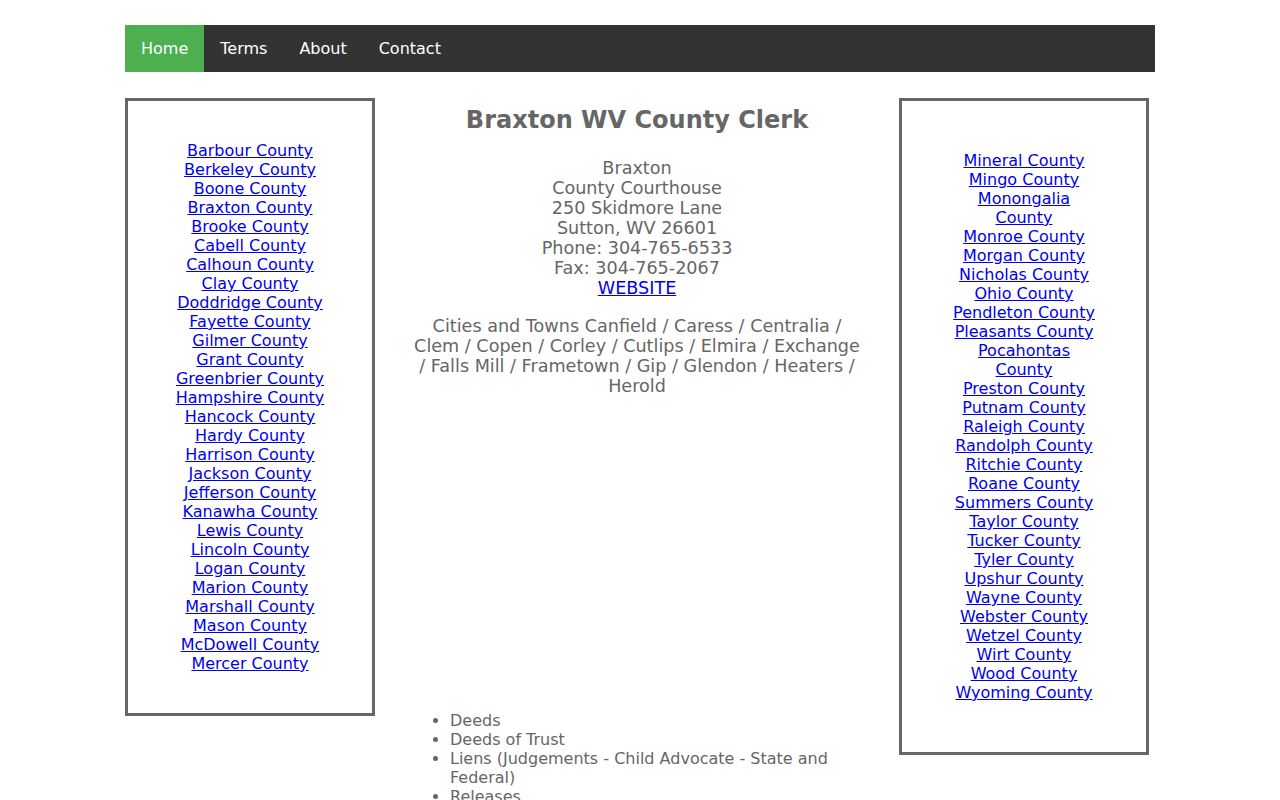
The category list helps you plan a deed search, but it says nothing about online image coverage.
The Braxton County Clerk Records Instruments
The County Clerk's official page names the Clerk as recorder. The Clerk records all documents presented for record in Braxton County. The office also maintains county commission records and handles probate appointments and wills. Any request should name the parties. It should also give the property description, the instrument type, and an approximate year. The web directory may not reveal a result. Then ask about a counter search, book index, or archived volume at the courthouse.
The courthouse contact is 300 Main Street, PO Box 486, Sutton, WV 26601. Listed phone numbers are 304-765-2833 and 304-765-2834. The county page gives no deed-image cutoff and no copy price. Ask before mailing a request. The statutory fee to record a new instrument differs from the cost of an old copy. They are separate charges. The official County Clerk page confirms the recorder's role and contact details.
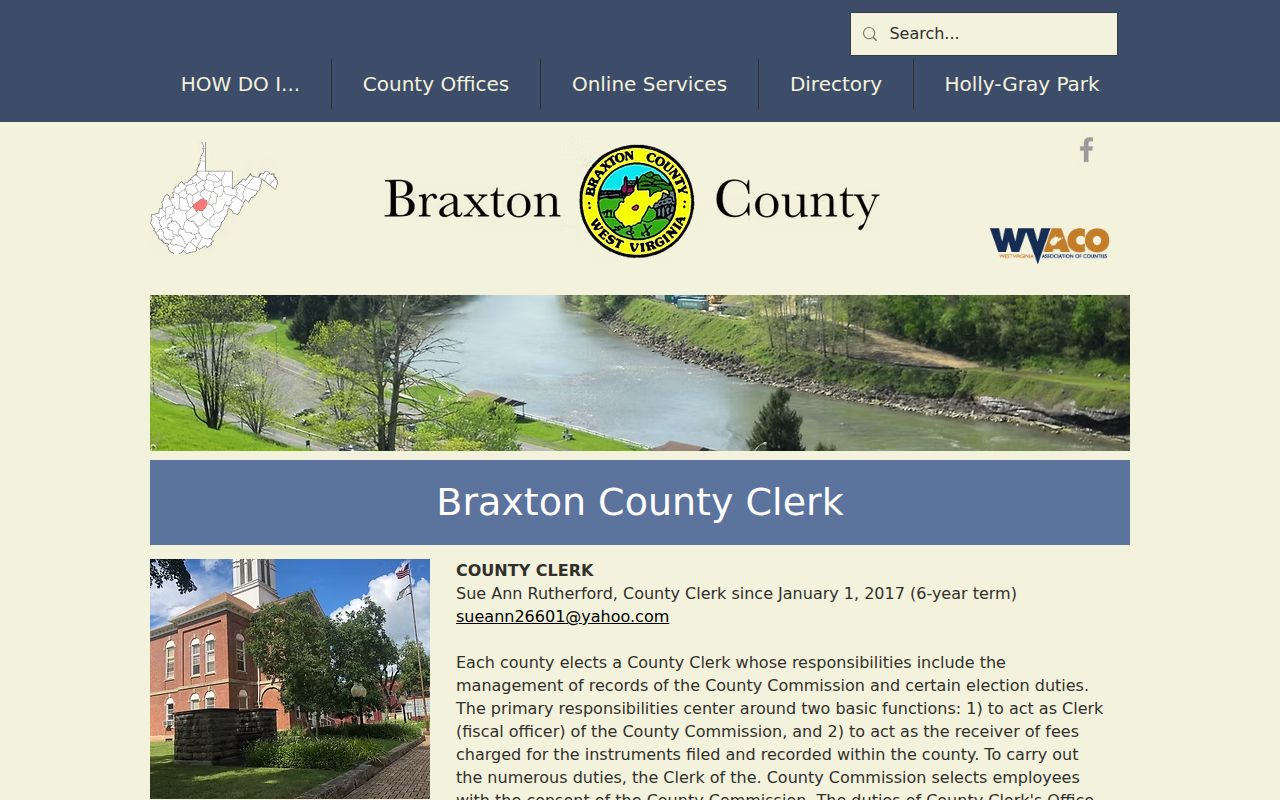
When the public directory fails to surface a useful index entry, the courthouse office remains the fallback.
Braxton's Grantor-Grantee Deed Index
The grantor transfers an interest; the grantee receives it. A chain of title is simply the sequence of recorded transfers for one parcel. The Braxton directory does not expose the live index's search fields. So treat party names and a known legal description as clues. Confirm the Clerk's preferred index method. A book and page reference is only a locator to a recorded volume. It is not the text of the deed itself.
- Start with the latest conveyance found from the assessment card's owner, legal description, or deed reference.
- Read the instrument to identify grantor, grantee, land description, date, and recording reference.
- Search the prior grantor as a grantee to locate the deed by which that party acquired the land.
- Repeat while checking each description for splits, added land, and changed community names.
- When the online directory stops, ask the Clerk or Archives for an earlier index or deed book; no cutoff year was confirmed.
- Grantor
- The party named as making the conveyance or granting an interest.
- Grantee
- The person or entity that receives the interest stated in the deed.
- Chain of title
- The ordered links of recorded transfers tied to the same land.
- Book and page
- A volume-and-page reference that locates recorded text; it is not a guarantee of current title.
Braxton Deed Copies and Recording Fees
West Virginia Code §59-1-10 sets the recording fee baseline for Braxton deed filings. A deed or deed of trust costs $30. A qualifying trustee report of sale is $40. A plat without a deed runs $10, the same as a UCC statement and other documents, with pages beyond five adding $1 each. A service discharge carries no charge under the listed schedule. A separate real-estate transfer excise tax appears in §11-22-2, so the recording fee is not necessarily the full amount due on a transfer.
The current statute also describes county retention changes and an additional county fee. Confirm the amount the Braxton Clerk accepts before filing or mailing anything. These figures cover recording, not a confirmed cost for an image or certified copy. The West Virginia recording-fee statute is the source for this schedule.
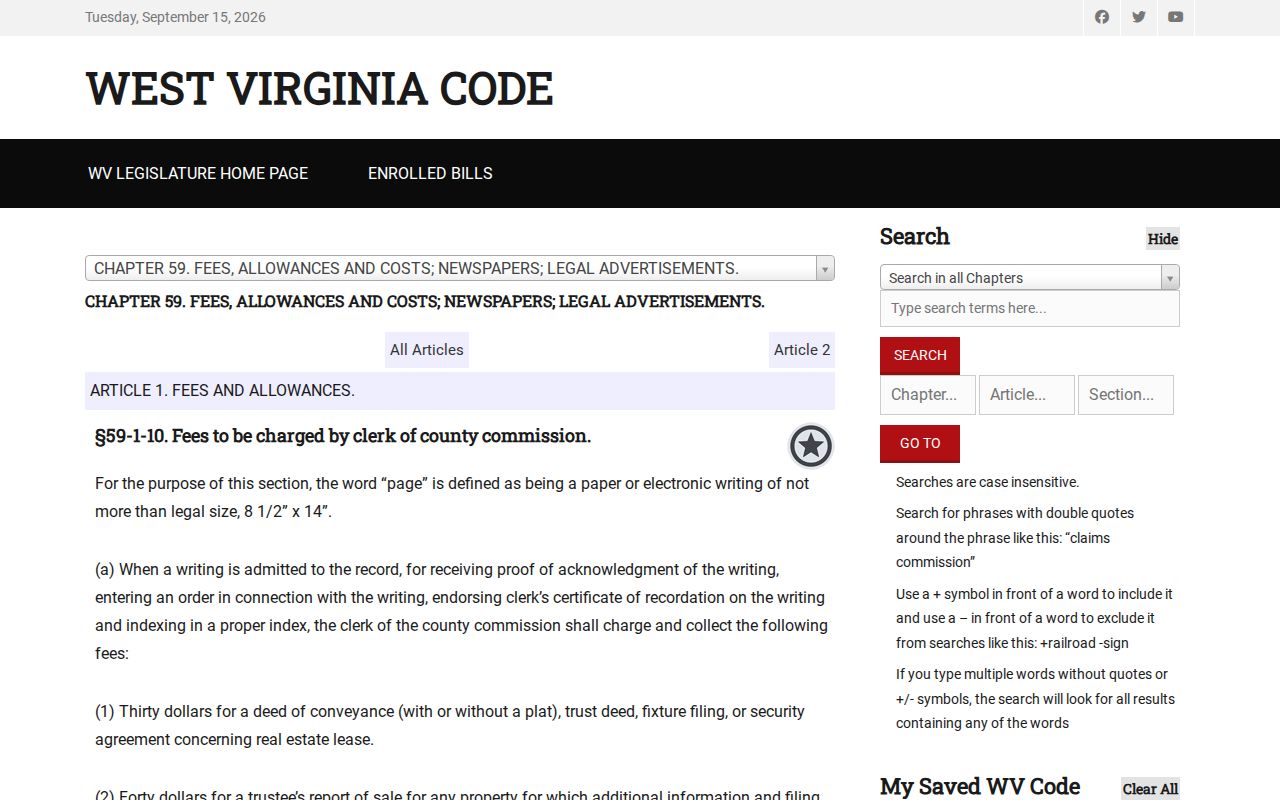
The Clerk can confirm how the fee schedule applies to a specific document and page count.
Braxton Online Deed Record Coverage Is Unconfirmed
Neither the County Clerk page nor the land-record directory states the first indexed year. No image cutover is listed, and the digitization of older books goes unmentioned. That gap matters for a chain-of-title search. Do not assume a web search reaches back to county formation. Do not invent a year for the oldest online instrument. Ask the Clerk which books and indexes cover the parcel's era.
Braxton County began in 1836 from parts of Lewis, Kanawha, and Nicholas counties. An early deed may therefore sit in a parent county's books. It could have been recorded before Braxton ever existed. The State Archives and History Library holds county court and historical material. Specific Braxton deed-book runs remain unconfirmed there. Preserve exact spellings and legal descriptions as you move from one grantor to the next.
Braxton Foreclosure Deed Records Need Context
The Clerk's directory covers more than deeds. Deeds of trust, liens, releases, assignments, and trustee reports of sale all sit in the index. Search by owner, lender, trustee, and legal description at once. A challenged foreclosure may also spawn court action. So can a quiet-title case, partition, or lien enforcement. Read the recorded instrument and the docket as separate sources. The WV Judiciary portal opens statewide circuit and magistrate case searches. The Braxton Circuit Clerk can be reached at 304-765-2837. The West Virginia Judiciary record-access page is the entry point.
Tax sales follow their own path. The Sheriff Tax Office publishes delinquent lists and sends redemption questions to the State Auditor. A mark on the delinquent-land map does not prove title has passed by tax deed. Notice, redemption, sale, and recorded deed material under Chapter 11A should all be checked first.
A docket names parties and events, but recorded land instruments live with the County Clerk.
Braxton Liens, Releases, and Assignments
Liens come in many forms in the Clerk's index. Judgment, Child Advocate, state, and federal liens appear alongside releases and assignments. Follow each entry forward. A later satisfaction can clear a recorded claim, while an assignment shows a loan interest moving to a new holder. The original document alone never tells whether the obligation still stands. Search both party sides, too. A deed of trust is indexed by borrower and secured party, yet a release may carry a different company name after a merger. Match the legal description, names, and recording date. When the index hides the full image, ask the Clerk directly.
Court dockets reveal enforcement or disputes. Even so, the recorded release remains its own land record.
Braxton's Older Deed Books Need Place Clues
Older Braxton deeds rarely carry modern house numbers. A historic description may lean on district, farm, creek, road, school, or another landmark instead. Preserve those words exactly. Compare the description against the next deed rather than forcing an address match. A lot split or added tract can make two records of the same property look unrelated.
The Archives and History Library holds county court records. It also keeps older vital material, newspapers, census, and related collections. Ask both the Clerk and Archives which Braxton deed-book runs each holds and how to view them. The 1836 county-formation date matters here. An earlier land instrument may sit in Lewis, Kanawha, or Nicholas County records.
Requesting a Braxton Deed Copy
Start with the directory. Identify the instrument category and any locator you already have. Then ask the County Clerk how to inspect or obtain the record. No index online for your year? Request a counter search or ask whether a volume sits in an archive. Confirm the current image, copy, or certification fee. Ask about the accepted payment method before sending money or paperwork.
A written West Virginia FOIA request works for any public record. It applies to anything a county or town holds. Describe the document with reasonable specificity. Name the parties, the parcel, the approximate recording period, and whether you want inspection or a copy. The five-day response rule skips weekends and legal holidays. A custodian may provide the records or arrange inspection. The custodian may also deny the request in writing with reasons given.
Recorded, not guaranteed. A Braxton deed index reflects filings located in the searched records. It is not a title opinion, and unrecorded interests or later instruments may change the result. A title professional reviews the full chain and applicable law.